Moving Fiverr upmarket.
Leading the design of a B2B platform that helps businesses find the right talent, build teams, and take on bigger projects.
My Role
Product Design Team Lead
Leadership
7 senior product designers
Scope
0 → 1 B2B platform
Contribution
Strategy, research, vision and hands-on product design

01/ The challange
A new audience.
A different kind of confidence.
Fiverr’s association with small, inexpensive gigs was a barrier to larger business projects.
Teams needed confidence in the people they hired, continuity across projects, and control over how work got done.
I helped reframe the opportunity around a business need: extend a team’s capabilities with talent they could trust.
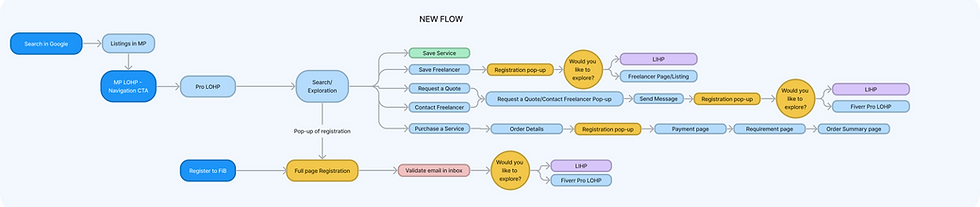
From the existing model of finding a service and placing an order to the new opportunity of finding the right people and building a working relationship.
I studied business tiers, collaboration tools, talent platforms, and customer interviews to understand what businesses actually needed.
1 - People behind the deliverables
Customers wanted to understand who they would work with, beyond the service on offer.
2 - Freelancers were already part of the team
Recurring relationships called for shared talent pools and continuity.
3 - Choice needed to create confidence
Relevant expertise and stronger decision signals mattered more than an endless catalog.
4 - Business work needed business infrastructure
Customers wanted to understand who they would work with, beyond the service on offer.
02/ From insights to product
Many business needs.
One coherent platform.
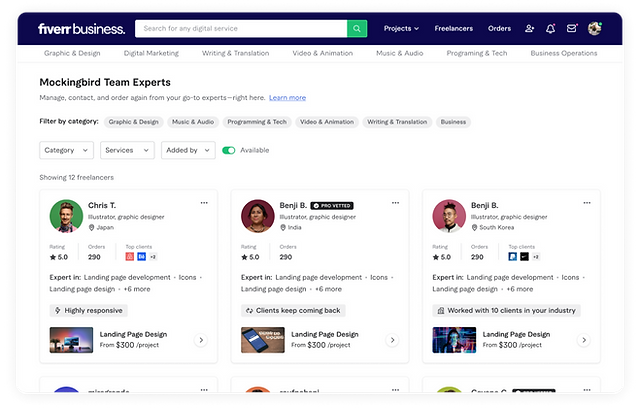
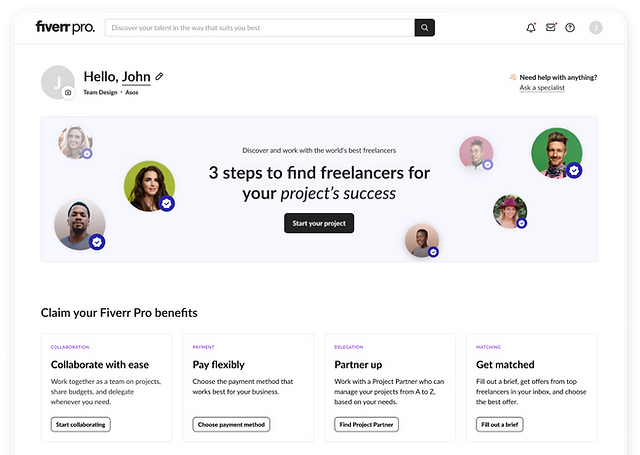
I translated the research into a product direction, leading the design team while staying hands-on across the experience.
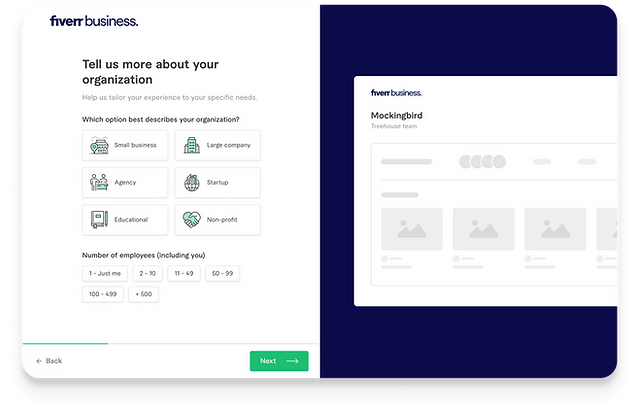
Start with business context.
Capture intent, company context, and project needs early, so the experience can respond to the customer rather than treating every buyer the same.
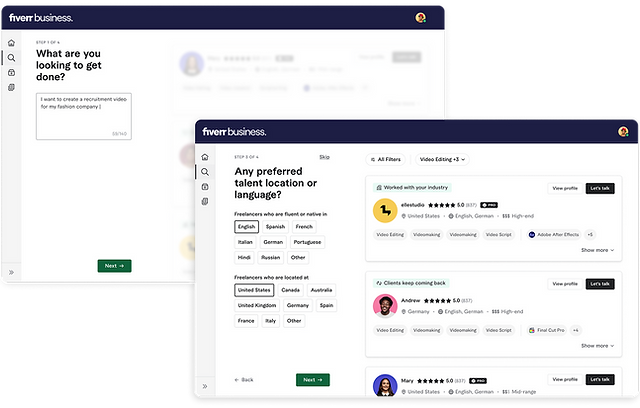
Use registration as an opportunity to understand intent and personalize the experience.
03/ Launch was a learning point
More capable.
Still not clear enough.
The results were encouraging, but the new experience exposed friction. Customers didn’t always understand the difference from Fiverr, and some migrated users felt locked into a more complex product.
Value needed to be visible earlier.
Help customers orient themselves before asking them to invest effort.
Quality didn’t erase price sensitivity.
Testing challenged an assumption at the heart of our positioning.
Customers wanted a deeper conversation.
Onboarding felt too rigid, some users wanted more questions before seeing results.

04 / Working backwards from the ideal
What if we designed
how customers
should feel?
The new direction resonated with our goals but we decided to change strategy.
The challenge was to think further ahead: define the ideal experience, then work backwards to what we could build.
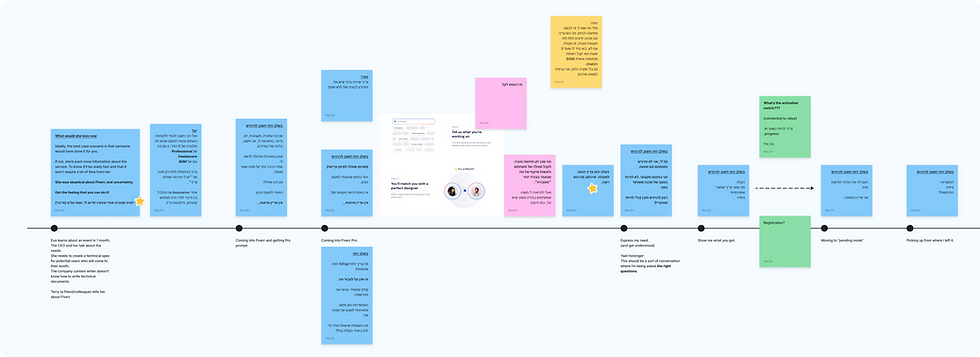
I shifted the journey from a sequence of screens to a sequence of emotions. The goal was confidence at every step, from an uncertain brief to a trusted handoff.
01 - Arrive
“I’m in the
right place.”
A professional, relevant experience that earns trust from the first impression.
02 - Express
“They
understand me.”
Help articulate the business need, even when the customer can’t define it yet.
03 - Discover
“I hadn’t thought
of that.”
Enrich the brief with possibilities and make the potential outcome tangible.
04 - Delegate
“I can
hand this off.”
Make the next step clear and the right professional feel like a confident match.
“Take this off my plate.”
05 / A brief look ahead
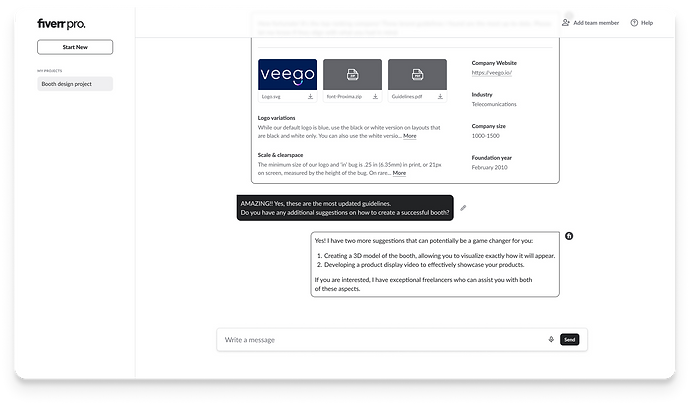
A conversation. An interface that adapts.
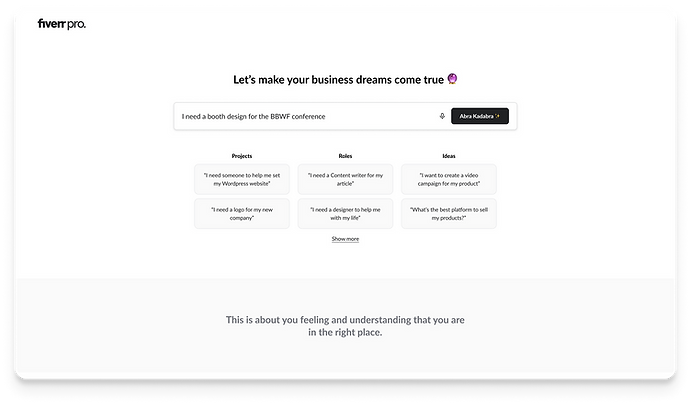
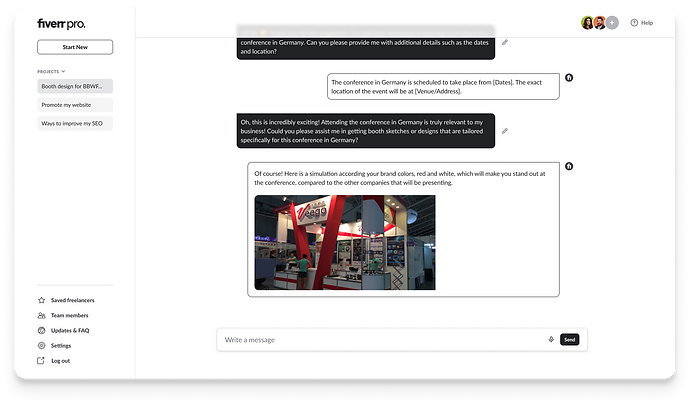
As generative AI emerged, I led a sprint exploring a single-page experience assembled around the customer’s intent:
understand the need, enrich it, and connect it to the right talent.
Discover the
business intent
A business need becomes the entry point.
The lasting shift
From buying a service to solving a business need.
This work brought together product strategy, team leadership, and hands-on design: understanding a new audience, turning research into decisions, shipping a platform, and using what we learned to rethink its future.